

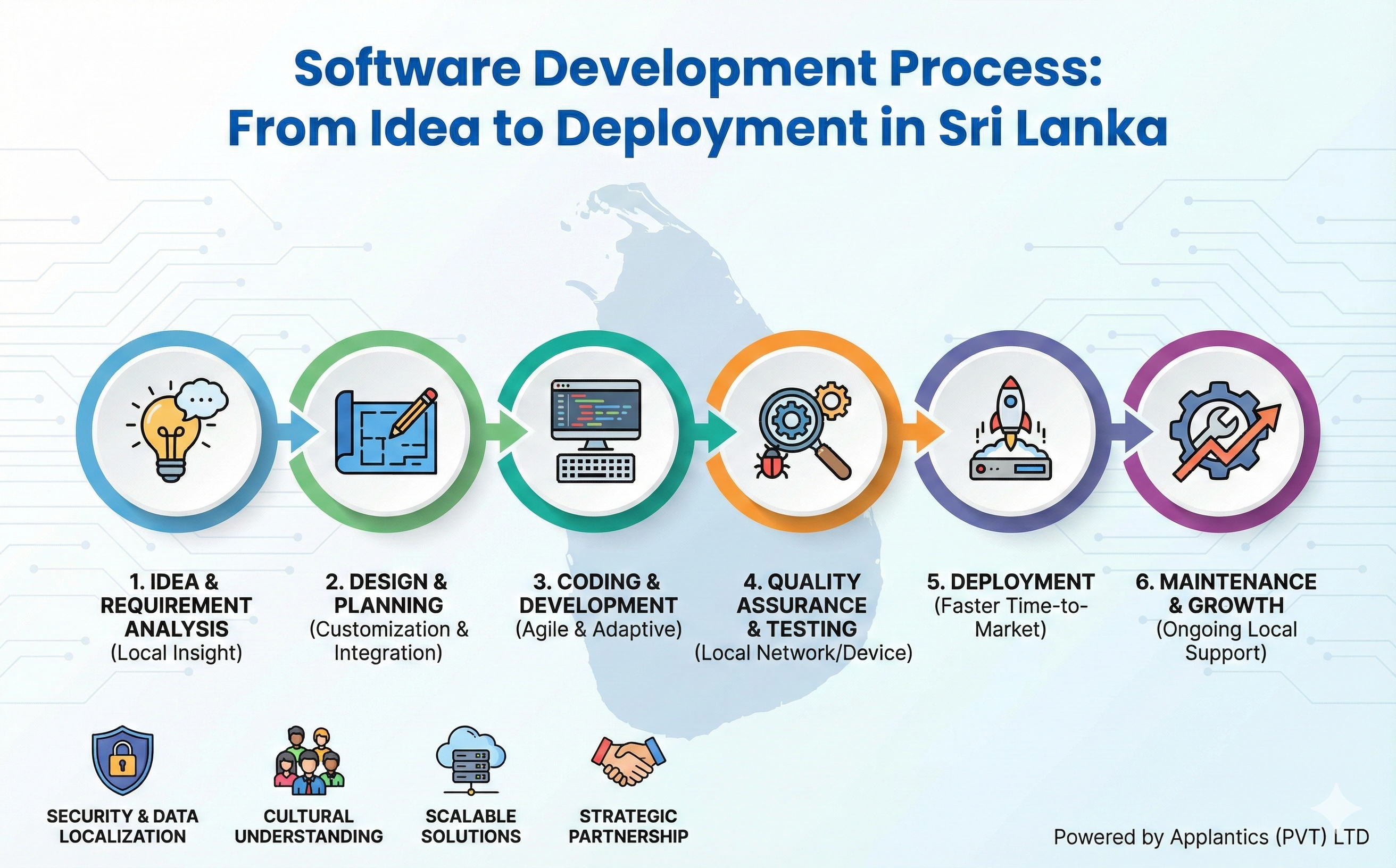
Quick Summary: The software development process is a systematic framework that transforms ideas into deployment-ready products through structured stages including requirement analysis, design, coding, testing, and maintenance. For Sri Lankan businesses navigating digital transformation, adopting a well-defined process ensures faster time-to-market, cost efficiency, and higher quality outcomes. This guide covers key stages, local considerations, best practices, and how to choose the right development partner for sustainable business growth.
Introduction
In Sri Lanka's fast-growing digital economy, businesses are increasingly looking to leverage technology to stay competitive, enhance efficiency, and drive growth. However, many organizations struggle to transform their innovative ideas into reliable, market-ready software.
Common challenges include unclear project scopes, limited technical expertise, budget constraints, and inefficient workflows—all of which can lead to delays and costly overruns. Drawing from our extensive experience in the Sri Lankan IT sector, it's clear that adopting a structured software development process is essential for success.
This article is designed for Sri Lankan business leaders, entrepreneurs, and IT managers who want to understand how to navigate the journey from concept to launch with confidence. We'll introduce a proven, locally-informed approach that helps streamline development, mitigate risks, and deliver tangible business value.
What Is the Software Development Process?
Definition: The software development process is a systematic framework used to design, build, test, and deploy software applications. It provides a clear pathway from initial idea to functional product, encompassing stages such as requirement analysis, design, coding, testing, deployment, and maintenance.
In real-world scenarios—whether you're developing a mobile app for a Colombo-based startup or an enterprise system for a manufacturing company in Kandy—this process ensures consistency, quality, and alignment with business goals. It's used by developers, project managers, and businesses across Sri Lanka's IT landscape to create solutions that are scalable, secure, and user-centric. Understanding this process is key for anyone looking to bring a digital idea to life in Sri Lanka's evolving tech ecosystem.
Why the Software Development Process Is Important for Businesses in Sri Lanka
Market Context: For Sri Lankan businesses, a well-defined software development process is more than a technical necessity—it's a strategic advantage. As the country continues to embrace digital transformation across sectors like finance, tourism, agriculture, and logistics, companies that adopt structured methodologies are better positioned to succeed.
Local market trends show that organizations using agile or iterative approaches experience faster time-to-market, improved resource allocation, and higher customer satisfaction. Beyond efficiency, a clear process addresses region-specific needs such as compliance with Sri Lanka's data protection guidelines, adapting to local user behaviors, and integrating with existing legacy systems.
For Sri Lankan enterprises, this means not only developing robust software but also enhancing operational resilience, reducing costs, and gaining a competitive edge in both local and global markets.
Key Stages of the Software Development Process
A comprehensive software development process typically includes these stages:
Requirement Analysis & Planning: Understanding your business needs, defining project scope, and identifying success metrics. This stage is critical for Sri Lankan businesses to align technical solutions with local market dynamics.
Design & Architecture: Creating detailed blueprints for how the software will function, including user interface design, system architecture, and integration points with existing systems.
Development & Coding: Writing the actual code based on design specifications, following coding standards and best practices to ensure maintainability and performance.
Quality Assurance & Testing: Rigorous testing protocols that account for local network conditions, device diversity, and language support (Sinhala, Tamil, English) to ensure reliability and user satisfaction.
Deployment & Launch: Carefully planning and executing the transition from development to production, with proper training and support for end users.
Maintenance & Support: Ongoing monitoring, updates, security patches, and continuous improvement based on user feedback and evolving business needs.
Key Features to Look for in a Software Development Service in Sri Lanka
When choosing a software development partner in Sri Lanka, consider these essential features tailored to the local context:
Requirement Analysis & Local Insight: A deep understanding of Sri Lankan business environments, user preferences, and regulatory requirements to ensure your software is relevant and compliant.
Agile & Adaptive Methodology: Flexible development approaches that allow for regular feedback and adjustments—critical in Sri Lanka's dynamic market.
Quality Assurance & Testing: Rigorous testing protocols that account for local network conditions, device diversity, and language support (Sinhala, Tamil, English).
Security & Data Localization: Strong data protection measures that align with Sri Lanka's emerging data privacy norms and potential localization requirements.
Customization & Integration: Ability to tailor solutions and integrate with local platforms such as government portals, banking APIs, or popular local software.
Ongoing Support & Maintenance: Reliable post-launch support with accessible local teams for troubleshooting, updates, and scalability.
Benefits of Using a Professional Software Development Process
Implementing a professional software development process in Sri Lanka delivers clear advantages:
- Increased Efficiency: Streamlined workflows reduce delays and improve team coordination across departments.
- Cost Control: Clear planning and early error detection prevent budget overruns and unexpected expenses.
- Higher Quality: Consistent testing and quality assurance leads to stable and user-friendly software.
- Faster Deployment: Iterative cycles enable quicker launches and earlier market entry for competitive advantage.
- Scalability & Adaptability: Structured processes make it easier to scale and modify software as your business evolves.
Custom vs Ready-Made Software Solutions
Custom Software Development
Choosing custom software development means building a solution specifically tailored to your business operations, offering unique features and full integration with local systems—ideal for businesses with complex processes or niche markets. While requiring higher upfront investment, custom solutions provide superior long-term value and competitive differentiation.
Ready-Made Solutions (SaaS)
Off-the-shelf solutions are more affordable and quicker to deploy, making them suitable for SMEs or businesses with standard needs. However, they may have limitations in customization and local integration. In Sri Lanka, where digital adoption is still expanding, many businesses start with off-the-shelf software and later transition to custom solutions as they grow and require more sophisticated functionality.
How to Choose the Right Software Development Partner in Sri Lanka
Selecting the right development team in Sri Lanka involves careful evaluation:
- Local Experience & Portfolio: Look for a partner with proven experience in Sri Lanka and projects similar to yours. Request case studies demonstrating measurable results.
- Technical & Domain Expertise: Ensure proficiency in technologies relevant to your industry and understanding of local infrastructure challenges.
- Transparent Communication: Choose a team that maintains clear, consistent communication in English or local languages throughout the project lifecycle.
- Post-Deployment Support: Confirm availability of ongoing maintenance, updates, and local technical support after launch.
- Cultural Understanding: A partner familiar with Sri Lankan business culture and practices can deliver more aligned and effective solutions.
Why Applantics Is a Trusted Choice in Sri Lanka
With over a decade of experience in Sri Lanka's IT industry, Applantics has established itself as a reliable and innovative software development partner. We combine deep local insight with technical excellence to deliver solutions that drive real business outcomes.
Our team understands the unique challenges and opportunities within Sri Lanka's market—from regulatory requirements to user expectations. We serve a diverse client base including startups, SMEs, and enterprises across sectors such as finance, retail, healthcare, and education.
Our commitment to quality is reflected in our client-centric approach, adherence to international standards, and strong post-launch support. At Applantics, we don't just build software—we build partnerships for sustainable growth in Sri Lanka's digital economy. Contact us today to discuss your software development needs.
Real-World Use Cases & Industries Served in Sri Lanka
Our software development process has been successfully applied across multiple industries in Sri Lanka:
- Tourism & Hospitality: Booking systems, customer management platforms, and multi-language support for hotels and tour operators enhancing guest experience.
- Finance & Banking: Mobile banking apps, loan management systems, and secure fintech solutions compliant with local regulations.
- Agriculture: Farm management tools, supply chain tracking, and market linkage platforms for Sri Lankan agribusinesses improving productivity.
- Education: E-learning platforms, student management systems, and virtual classroom solutions tailored for local curricula and learning objectives.
- Retail & E-commerce: Custom online storefronts, inventory management, and payment gateways integrated with local banks and payment providers.
Frequently Asked Questions
Is this process suitable for small businesses in Sri Lanka?
Yes, our approach is scalable and designed to meet the needs and budgets of Sri Lankan small businesses, helping them launch efficiently without unnecessary complexity.
Can the software be customized for Sri Lankan regulations?
Absolutely. We ensure all solutions comply with local data protection, financial, and industry-specific regulations governing businesses in Sri Lanka.
Do you offer cloud-based or on-premise solutions in Sri Lanka?
We provide both cloud-based and on-premise solutions, depending on your security needs, connectivity infrastructure, and business preferences.
What kind of local support do you provide after launch?
We offer ongoing maintenance, local technical support, regular updates, and training to ensure smooth operation and maximize your software investment.
How long does a typical software project take in Sri Lanka?
Timelines vary, but most projects range from 3 to 8 months, depending on complexity, features, requirements, and testing needs.
Conclusion & Call to Action
Key Takeaways: A well-structured software development process is the foundation of any successful digital initiative in Sri Lanka. It brings clarity, efficiency, and reliability to every stage—from idea to deployment—helping your business innovate with confidence. Understanding and implementing this process minimizes risks, controls costs, and maximizes the impact of your technology investments.
Next Steps: By partnering with a locally experienced team like Applantics, you gain not only technical expertise but also a deep understanding of Sri Lanka's market dynamics and opportunities. We guide you through every stage of the development journey, ensuring your software solution aligns with business objectives and delivers measurable value.
Ready to turn your vision into reality?
Action Items:
- Contact Applantics today for a free consultation about your software needs
- Request a portfolio review of our past software development projects
- Schedule a discovery call to discuss your project requirements and timeline
- Get a customized proposal and development roadmap
Visit our contact page or call us to start your software development journey today.